Rotator Cuff Strain & Tendinopathy Treatment in Houston, TX
Rotator cuff injuries account for over 4.5 million doctor visits each year — but surgery is not always the answer. At MVMT Chiropractic, our Houston chiropractors treat rotator cuff strains and tendinopathy with a powerful combination of shockwave therapy, laser therapy, dry needling, and targeted rehabilitation to restore shoulder function without surgery. Call (832) 391-8077 to schedule in today.
Understanding the Rotator Cuff
The shoulder is the most mobile joint in the body — capable of movement in more directions than any other joint — and that mobility comes at a cost: inherent instability. The glenohumeral joint (the ball-and-socket of the shoulder) is heavily dependent on the surrounding soft tissue for stability, particularly the rotator cuff, glenoid labrum, joint capsule, and capsular ligaments.
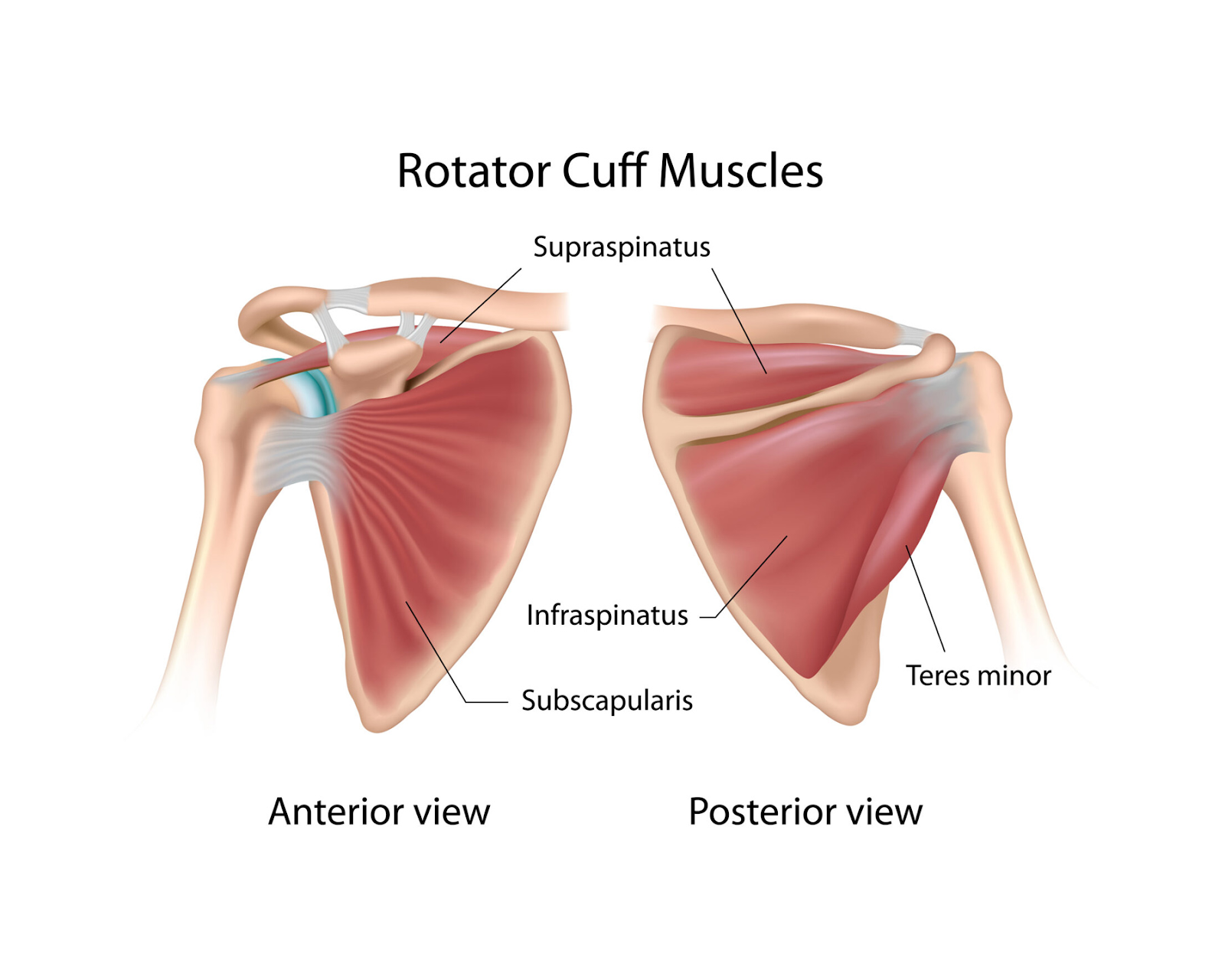
The rotator cuff is made up of four muscles that work together to center the ball of the shoulder in the socket during movement and to rotate the arm:
- Supraspinatus: Initiates arm elevation and helps lift the arm to the side. This is the most commonly injured rotator cuff muscle.
- Infraspinatus: Externally rotates the arm (rotates it outward).
- Teres Minor: Assists the infraspinatus in external rotation.
- Subscapularis: Internally rotates the arm.
When any of these muscles are strained or their tendons become degenerated (tendinopathy), it creates pain, weakness, and dysfunction throughout the shoulder complex. If left untreated, compensatory movement patterns develop and the condition typically worsens over time.
Common Symptoms of Rotator Cuff Injury
Rotator cuff injuries can present across a spectrum from mild to severe. Common symptoms include:
- Shoulder pain, particularly with overhead movements or reaching behind the back
- Pain at night, especially when lying on the affected shoulder
- Weakness with lifting or rotation of the arm
- Reduced range of motion in the shoulder
- Tenderness near the top or front of the shoulder
- Referred pain or aching down the outer arm
How We Treat Rotator Cuff Injuries at MVMT
Our approach is tailored to the severity of the injury. For muscle strains, we use targeted soft-tissue modalities. For tendinopathy — where the tendon tissue itself has degenerated — we employ tissue-regenerative therapies that stimulate the healing process at a cellular level.
Shockwave Therapy
For rotator cuff tendinopathy, shockwave therapy is one of the most effective treatments available. The acoustic waves stimulate angiogenesis (new blood vessel formation), recruit growth factors and stem cells to the injury site, and directly target damaged tendon tissue — initiating a true healing response rather than simply managing symptoms. MVMT Chiropractic uses the SoftWave OrthoGold for the deepest and most effective shockwave treatment available.
MLS Laser Therapy
MLS Cold Laser Therapy rapidly reduces inflammation, stimulates blood flow, and increases cellular energy production in the damaged tendon. In more severe cases, laser therapy is used in combination with shockwave to expedite the healing process — the two modalities work synergistically to address inflammation and tissue degeneration simultaneously.
Dry Needling, Cupping & Myofascial Release
For rotator cuff muscle strains, dry needling, cupping, and myofascial release are applied to release trigger points, reduce muscle guarding, and restore normal tissue mobility throughout the shoulder, upper back, and neck — which are often simultaneously affected.
Corrective Exercises and Rehabilitation
Long-term rotator cuff recovery requires restoring shoulder stability, strength, and movement quality. Your home exercise program will target the specific deficits identified in your evaluation — typically focusing on rotator cuff strengthening, scapular stabilization, and shoulder mobility — to ensure durable results and reduce the risk of reinjury.
Call (832) 391-8077 to schedule at our River Oaks, Memorial, or Heights location today.
Rotator Cuff Strain & Tendinopathy — Frequently Asked Questions
What are the symptoms of a rotator cuff injury?
Common symptoms include shoulder pain with overhead activities or reaching, night pain (especially lying on the shoulder), arm weakness with lifting or rotation, reduced range of motion, and tenderness near the top of the shoulder. Severity ranges from mild muscle strain to significant tendon degeneration.
Can a rotator cuff injury heal without surgery?
Yes — the majority of rotator cuff strains and tendinopathy cases respond very well to conservative care. At MVMT Chiropractic, we use shockwave therapy, MLS laser therapy, dry needling, and rehabilitation to stimulate tissue healing and restore full function in most patients without the need for surgery.
What is the difference between a rotator cuff strain and rotator cuff tendinopathy?
A rotator cuff strain involves acute tearing or overstretching of the muscle fibers themselves. Tendinopathy refers to degeneration of the tendon — a chronic condition caused by repetitive overload that results in structural changes to the tendon tissue. Both are treatable, but tendinopathy typically requires tissue-regenerative therapies like shockwave to produce lasting results.
Which rotator cuff muscle is most commonly injured?
The supraspinatus is the most commonly injured rotator cuff muscle. It is responsible for initiating arm elevation and is positioned in a narrow space between the bones of the shoulder, making it vulnerable to compression, impingement, and overuse injury — particularly in overhead athletes.
How effective is shockwave therapy for rotator cuff tendinopathy?
Shockwave therapy is one of the most clinically supported treatments for rotator cuff tendinopathy. It stimulates new blood vessel formation, recruits healing cells to the degenerated tendon, and initiates a tissue repair process that more passive treatments cannot replicate. At MVMT Chiropractic, we use the SoftWave OrthoGold for deep, precise treatment of rotator cuff injuries.
How long does rotator cuff treatment take at MVMT Chiropractic?
Treatment duration depends on injury severity and type. Mild muscle strains may resolve in 3 to 6 weeks. Tendinopathy typically requires 6 to 12 weeks of consistent treatment combined with home exercise compliance. Your provider will outline a specific timeline at your first appointment.
Can I keep exercising with a rotator cuff injury?
In many cases, yes — with appropriate modifications. Your MVMT Chiropractic provider will guide you on which activities to continue, modify, or temporarily avoid based on your specific injury. Maintaining strength and mobility in the unaffected planes of motion during recovery is important for long-term outcomes.