Shockwave Therapy vs. Laser Therapy: Which One Is Right for Your Pain?
If you’ve been dealing with chronic pain from a tendon injury, plantar fasciitis, or soft-tissue condition, you’ve probably come across two treatments that keep showing up in the research: shockwave therapy and laser therapy. Both are available at MVMT Chiropractic across our Houston locations, and both produce impressive clinical results — but they work differently, and they’re best suited for different situations. Here’s what you need to know.
What Is Shockwave Therapy?
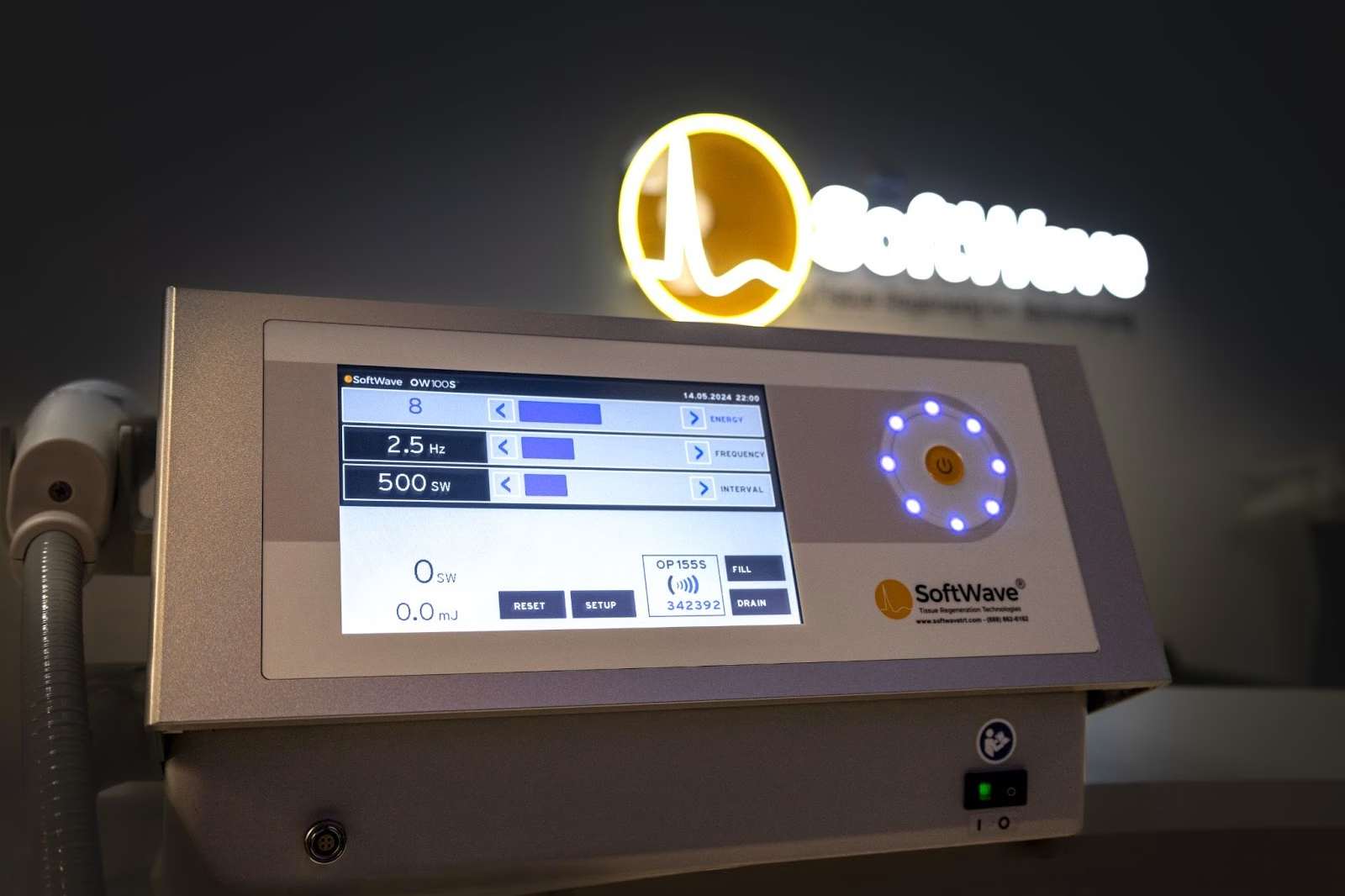
Shockwave therapy uses acoustic pressure waves to stimulate the body’s healing response in damaged soft tissue. At MVMT Chiropractic, we use the SoftWave OrthoGold — an electrohydraulic device that generates the largest and deepest therapeutic zone of any shockwave system available. The acoustic waves stimulate angiogenesis (new blood vessel formation), recruit stem cells and growth factors, and break down calcific deposits — initiating real tissue repair rather than simply managing symptoms.
Shockwave therapy is the treatment of choice for chronic tendinopathy, where the tendon has undergone degenerative changes that passive treatments can’t reverse. Clinical studies report success rates of 60 to 80% for conditions like plantar fasciitis, Achilles tendinopathy, rotator cuff tendinopathy, and lateral epicondylitis (tennis elbow). Shockwave is also highly effective for calcific shoulder tendinitis and chronic muscle trigger points that haven’t responded to other interventions.
What Is MLS Laser Therapy?
MLS Laser Therapy uses synchronized dual wavelengths of light energy delivered deep into tissue to reduce inflammation, decrease pain signaling, improve circulation, and stimulate cellular repair. MVMT Chiropractic uses the MLS® M6 and M7 — among the most advanced Class IV therapeutic lasers available. Unlike low-level cold lasers, MLS technology delivers sufficient energy to create measurable biological changes deep within tissue.
Laser therapy excels in the acute-to-subacute phase of injury — when inflammation is the primary driver of pain. It’s also highly effective for neuropathic conditions (including peripheral and diabetic neuropathy), post-surgical healing, and conditions where reducing inflammation quickly is the priority. It has an excellent safety profile for sensitive tissue and is completely painless, making it ideal for patients who need a gentle starting point.
Key Differences at a Glance
Best for acute injury and inflammation: Laser therapy. Its anti-inflammatory effects are fast and cumulative, and it’s the better choice when tissue is acutely irritated or when you need quick pain reduction to begin rehab.
Best for chronic tendinopathy and degenerative tissue: Shockwave therapy. Where the tendon has undergone structural degeneration, shockwave initiates a healing response that laser alone cannot match. Most research supporting shockwave involves chronic conditions (symptoms lasting more than 3 months).
Discomfort during treatment: Laser therapy is painless. Shockwave causes mild-to-moderate discomfort during treatment for most patients, which is calibrated by the provider to remain within a therapeutic range.
Treatment time: Both are fast — 8 to 15 minutes per session, with no downtime.
When We Use Both Together
In many cases, the best approach is combining both modalities. For rotator cuff tendinopathy, tennis elbow, or severe plantar fasciitis, for example, we may use shockwave to stimulate tissue regeneration while using laser to control inflammation and accelerate healing between sessions. The two modalities work synergistically — shockwave targets the structural pathology while laser addresses the inflammatory microenvironment around it.
How Do You Know Which You Need?
The answer depends on your diagnosis, symptom duration, and how the tissue has responded to previous care. A comprehensive evaluation at MVMT Chiropractic will identify what’s driving your pain and which treatment — or combination of treatments — will produce the fastest, most durable results for your specific situation.
Ready to find out which approach is right for you? Call (832) 391-8077 to schedule your consultation at any of our three Houston locations.
Sources: Moya D, et al. “The role of extracorporeal shockwave treatment in musculoskeletal disorders.” Journal of Biophotonics. Stania M, et al. “Extracorporeal shockwave therapy — its biological and clinical aspects.” Annals of Agricultural and Environmental Medicine.